


When Walt Disney first conjured Disneyland, there were no theme parks. There was no design vocabulary for him to adopt, no protocols to reference, no roadmap to follow. With an unwavering sense of mission and purpose and by sheer force of will, Disney developed a new form of experiential and immersive entertainment and the prototype for what would become known as theme parks.
The themed entertainment industry that Disney pioneered is well established now. Nevertheless, Adeleh Basiri faced a daunting challenge. Charged with leading the design team for the Kish Theme Park Resort–the first of its kind in Basiri’s native Iran–she had to embark on the project with no attraction design experience, no Iranian parks to help guide her, and no infrastructure or expertise in the country on which to draw. With an advanced degree in architectural studies, Basiri used the same kind of in-depth research that helped sustain her successful career developing large-scale urban projects. She also employed a can-do attitude and a spirit of adventure (that no doubt would have impressed Disney) to forge ahead.
The result is a wholly unique–and distinctly Iranian–take on a theme park. The experience has led Basiri to consider the role that culture should play in the design process for themed entertainment in new and emerging markets such as Iran.
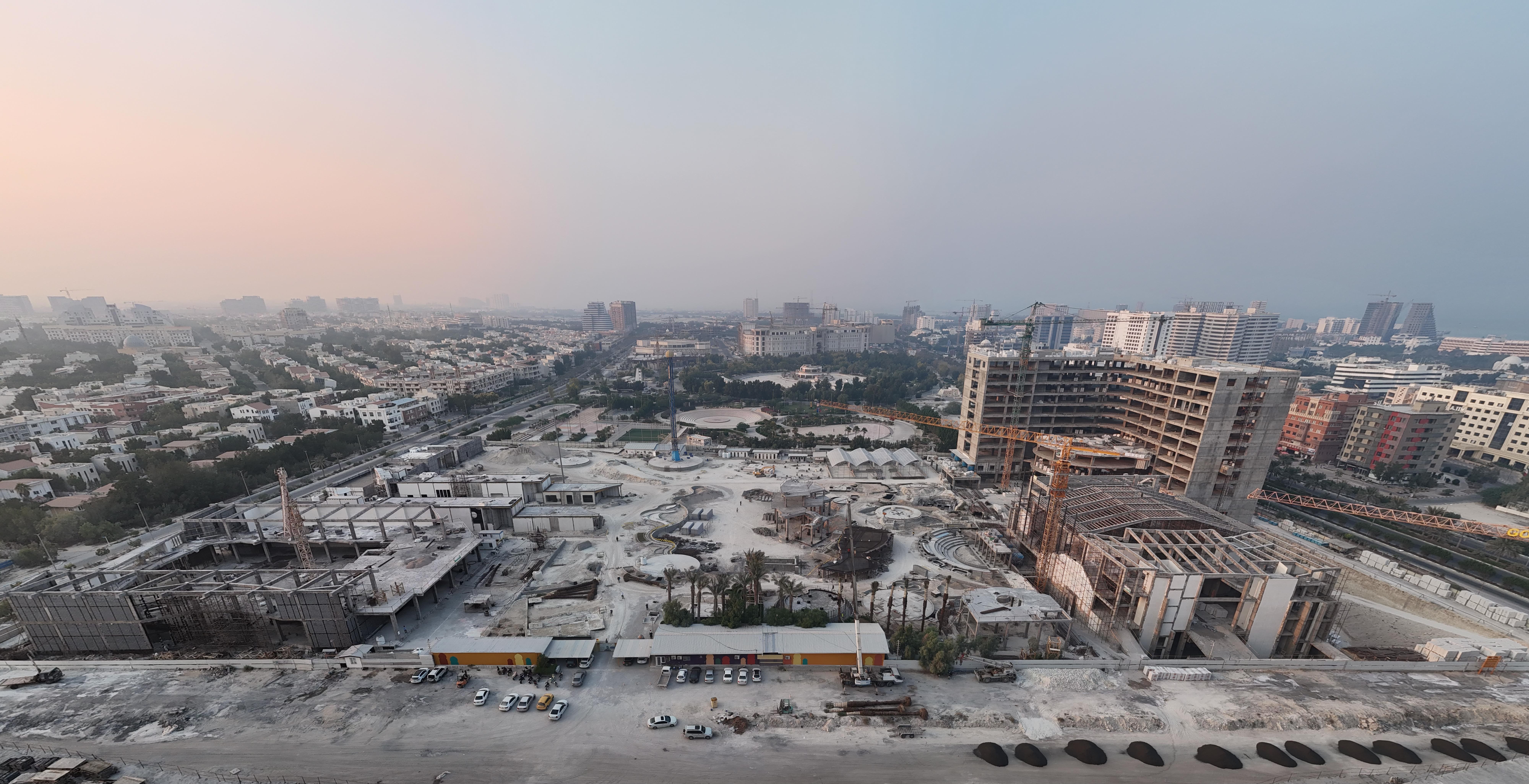
Located on Kish Island, a popular vacation spot in the Persian Gulf, the Kish Theme Park Resort is being developed by the Iranian company, Parsis Zarmehr Kish. The resort, which will include a 300-room, five-star hotel, a concert hall, and sports and entertainment facilities, spans 63,000 square meters. The outdoor theme park will occupy a 36,000-square-meter (equivalent to about 9 acres) footprint along with a 10,000 square meter indoor family entertainment center. That’s considerably smaller than most major theme parks, which typically range in size from 80 to 120 acres. 12 rides are planned for the park.
The project, which was well under construction, has largely been on hold since the start of the Iran War. Absent the conflict, the park and resort likely would have been open by now.
Unlike most modern theme parks, Kish does not reference any established intellectual properties. Instead, Basiri and her team collaborated with a project writer to develop original themes and characters that draw on Iranian and Middle Eastern culture. Approaching the project with a fresh perspective, Basiri has subsequently created an emerging framework, which she dubs “Designing Utopian Experiences.” It conceptualizes how the idealized environments presented in theme parks relate to culture and how and when culture should be considered when crafting a park.
Basiri’s model breaks down the design process into three layers that flow from one to the next: core, mantle, and shell. Core refers to the universal, fundamental yearning for a utopian experience. She describes the innate desires that we all share for things such as happiness, wonder, adventure, escape, meaning, and freedom. To Basiri’s list, I would add optimism, reassurance, hope, connection, and joy. Walt Disney seemed to instinctively understand these underlying longings when he envisioned Disneyland. The Imagineers with whom he worked, such as John Hench, specifically articulated attributes such as reassurance as guiding design principles for the company’s parks and attractions.
Mantle, as envisioned by Basiri, is the cultural interpretation of the core utopian experience. “Happiness” at Disneyland takes on a decidedly American tone that embraces traits such as rugged individualism, patriotism, and a belief that technology will lead to a brighter tomorrow. These ideals wouldn’t resonate as much with an Iranian audience since its worldview skews more to the culture’s interpretations of things such as family, love, heroism, and humor. The shell is the physical, practical environment at the park–how designers deliver the experience to guests via attractions, architecture, soundscapes, color palettes, and the like to realize the cultural meaning.
The problem, as Basiri sees it, is that as themed entertainment has expanded globally, the industry has relied on a largely Western template and localized it with things such as regional music, food, and costumes that often amount to little more than window dressing. The process, she believes, is backwards.

“My proposition is that cultural research should function as a form of design strategy: a system at the early stages of a project which, before visual design begins, influences the brief, narrative logic, emotional structure, and guest experience of a themed destination,” Basiri says. In other words, culture should be considered at the mantle level, not at the shell level. Designers, she contends, need to carefully consider projects’ locales and audiences so they can tailor them from the get-go to create meaningful utopian experiences. It is “the difference between using culture as a visual or decorative layer and using cultural research as part of the initial design logic,” adds Basiri.
So, what does her design process look like in practice? Let’s examine one of Kish Theme Park’s featured attractions, Wheel of Spirits, to get a sense of the ways that cultural research has influenced its development. Located in The Gypsy Quarter, the bustling land will include food stalls, strolling musicians, fortune tellers, and street performers. Basiri says that Wheel of Spirits is predicated on the importance of connecting with ancestors and shamanic beliefs of respecting and communicating with the spirit world. The attraction is designed to serve as a portal from the living world to the realm of the dead.
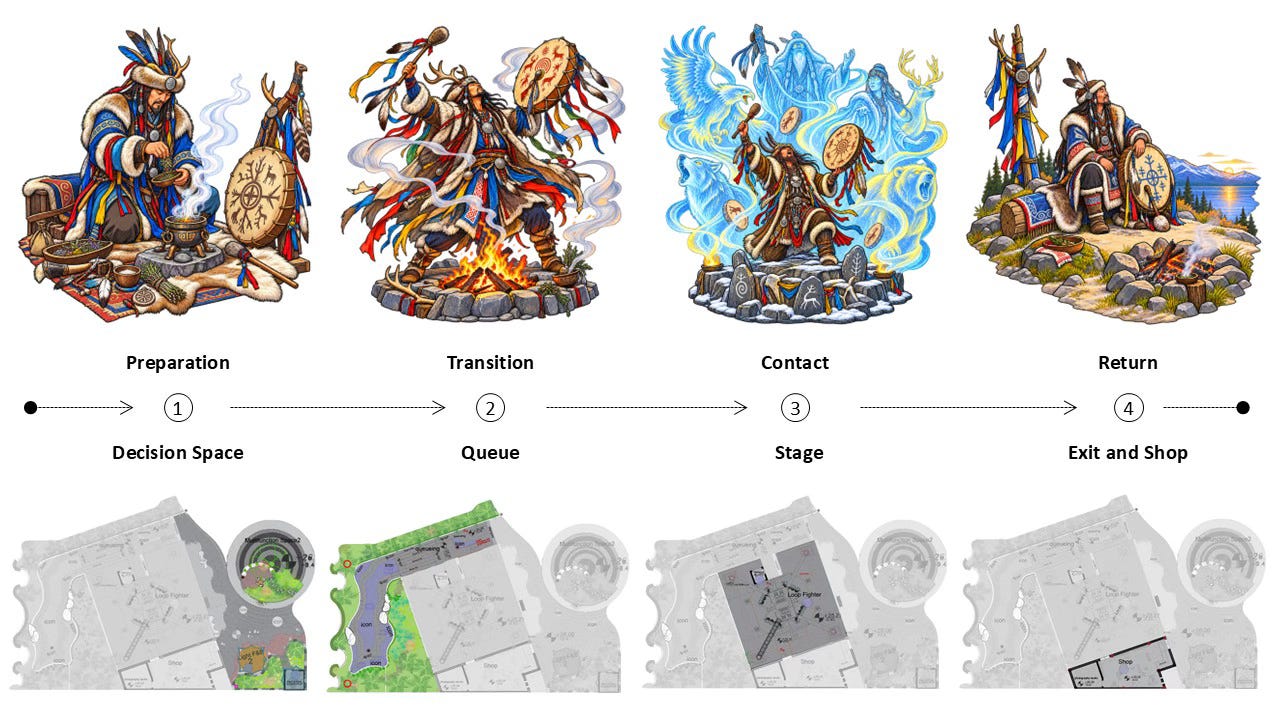
The Kish team began with a short narrative premise developed by the project writer: The people of the fictional world of Parais have created a device that allows them to remember and make contact with their ancestors. Basiri says that the Persian expression, “I was so scared, I saw my ancestors before my eyes," was the spark that led to the thematic concept for the thrill ride. This inspired the design team to study beliefs and rituals related to connecting with the spirit world, including preparation, transition, contact, and return, and use them to help design the attraction’s queue, pre-show, ride experience, and other elements.
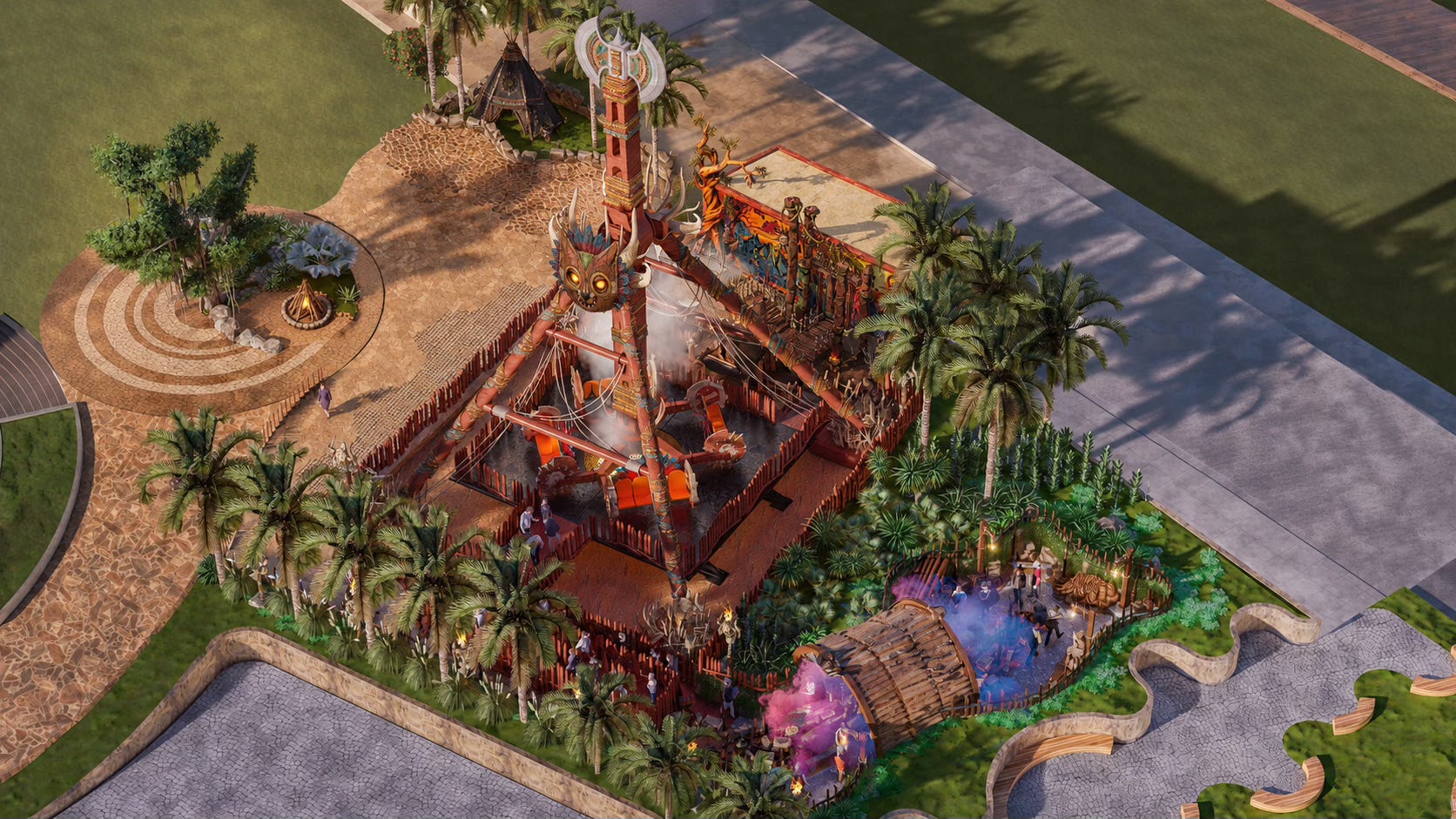
“The research began to organize the guest journey itself, rather than simply informing the visual environment,” says Basiri. “I have recently begun referring to this broader process as ‘cultural alchemy’–absorbing, reinterpreting, transforming and re-expressing cultural material as a new, context-specific experience.”
In the queue, gusts will find decorative representations of spirits and immortality set to death march music composed for the attraction. They will be able to see themselves depicted alongside spectral representations of deceased ancestors (evoking, perhaps, the hitchhiking ghosts from Disney’s Haunted Mansion?). Guests will be introduced to Saman Dombeh, the grand shaman of the gypsies. A walkaround character, he will encounter folks in the queue and whisper aphorisms to them as well as hand them small objects such as wishing stones, colorful feathers, and animal masks. The impish, charismatic Saman will inject humor, which is highly valued in Iranian culture, into the attraction. The funny character will enable the otherwise serious story about death and the spirit world to be accessible and entertaining. The use of humor also illustrates how the Kish designers considered and incorporated culture at the mantle level.
As they continue through the queue, guests will be invited to write their wishes on ribbons and display them. They will also enter The Painting Tent, a pre-show of sorts during which park members will apply henna designs to guests’ faces and hands. Finally, they will make their way into a tunnel filled with colorful plumes of fog, pleasant scents, and holographic imagery, which represent spiritual cleansing rituals of smoke and fragrance. The sensory and experiential elements are based on research about ritual practices and are fashioned to weave a story, help guests transition into the spiritual world, and set the stage for the ride that follows.


With its lavish attention to detail, evocative and compelling theme, and stunning design, the ambitious Wheel of Spirits would seem to be a fully immersive and enchanting experience. Clearly, cultural research has been thoughtfully considered at every step of the design process. However, I have to wonder whether some of its conceptual elements would be practical in operational application.
For example, would the walkaround character be able to interact on such a personal level with many guests in the queue? And how would he distribute a large number and variety of items as envisioned by Basiri and her team? Would enough visitors take the time to jot down their wishes on ribbons? Might the ribbon activity impede the flow of guests in the queue? How long would it take to apply henna designs, and how many guests could be accommodated at a time in The Painting Tent? Could all of these elements be delivered at scale? Would a critical mass of people be able to experience the Wheel of Spirits as intended?
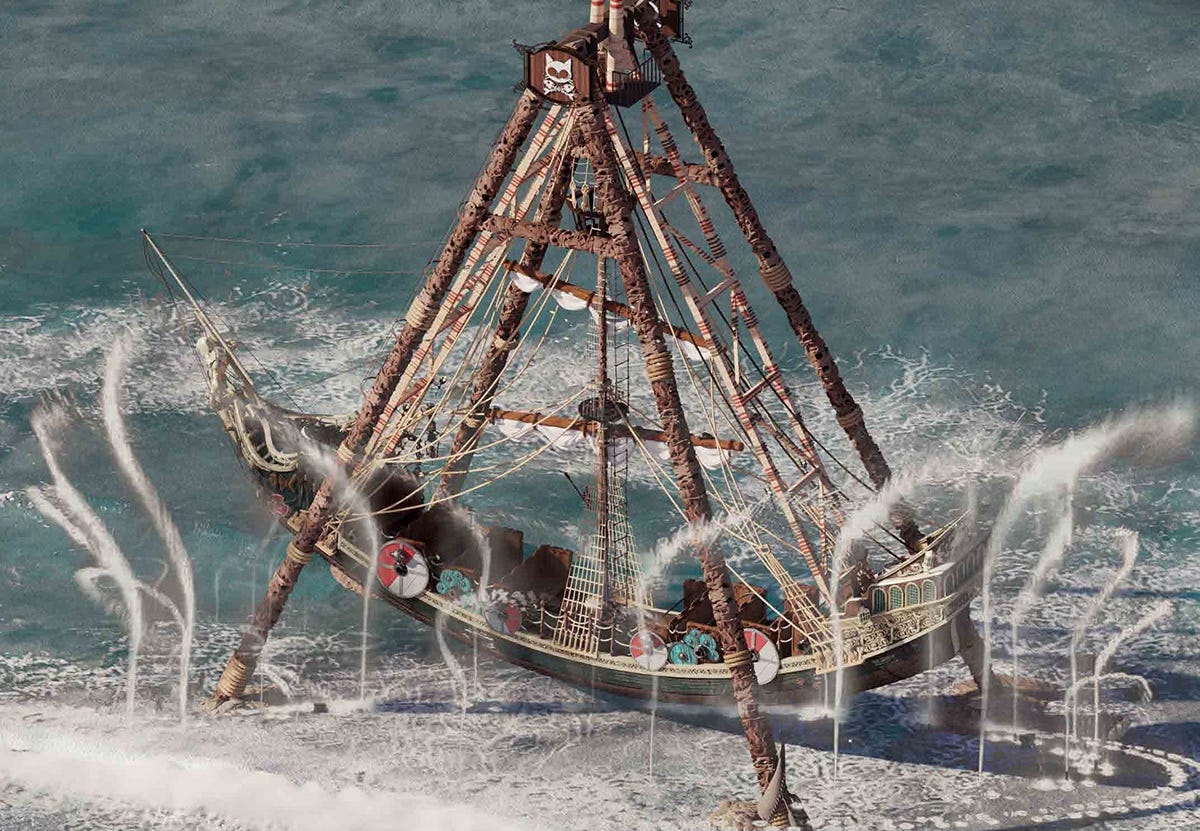
The attraction uses a high-thrill pendulum ride, similar to a Loop Fighter, that swings passengers high into the air. With 16 seats, it probably will have a theoretical hourly ride capacity of about 300 passengers. So, as with my observations about the number of people that could likely be handled in the queue, the ride at the heart of Wheel of Spirits is not designed for huge crowds. Save an outdoor dark ride that uses a train, the attractions planned for Kish Theme Park are mostly flat rides, such as a Pirate Ship, a Flying Carousel, and a Booster, that also have fairly low passenger capacities. Like Wheel of Spirits, they are all highly stylized and have rich accompanying stories.
Some major roller coasters (there are no coasters in the works for the Iranian park) and attractions such as Pirates of the Caribbean can accommodate upwards of 3,000 guests per hour. Perhaps Kish doesn’t aspire to Disney crowd levels, however, and the comparatively small park is going for a more intimate, boutique experience.
Regardless, for a country that has never had such a place, Kish Theme Park seems poised to be embraced, inspire wonder, and transport guests to a utopia keenly attuned to and explicitly designed for the people of Iran.
Share your thoughts about the planned Kish Theme Park and Adeleh Basiri’s design approach. Everyone can comment.
Arthur, thanks for expanding my knowledge of the theme park industry. I had no clue about this proposed park.