


You know what roller coasters, carousels, and Ferris wheels are. But have you ever heard the term, “dark ride,” and wondered what the heck it meant? How about “flat ride?” I sometimes casually toss off those and other insider-y terms in my articles, but it occurs to me that some ATPers as well as more casual readers who discover my stories through search (like you, perhaps?) may not be up to speed.
As with any specialty, folks working in the parks and attractions industry (and journalists like me that cover the beat) have their own lingo and jargon. Let’s explore some of the more common types of rides and break down what their names mean. You’ll be speaking like an industry pro in no time.
What is a dark ride?
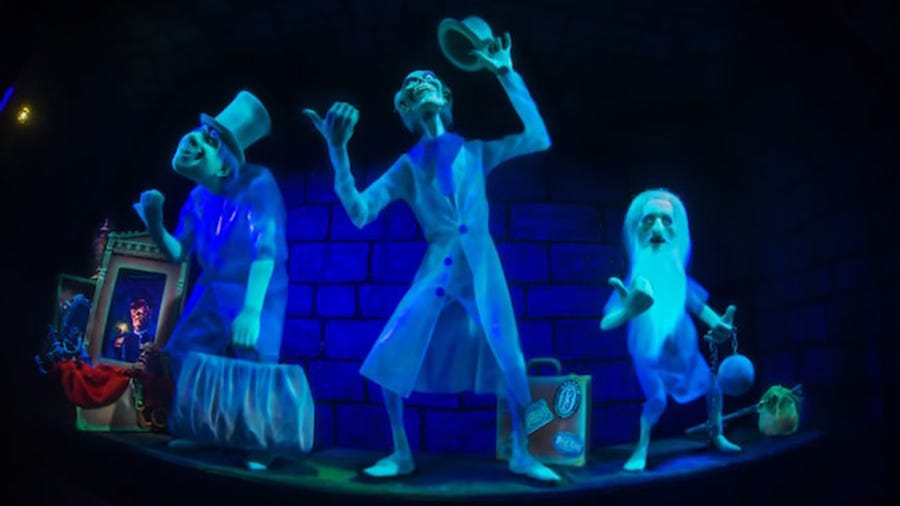
A dark ride refers to any amusement park or theme park ride that uses vehicles to send passengers into an indoor environment and through a series of scenes or tableaus. While most dark rides feature cars on a track, some use boats that float in channels of water (like Pirates of the Caribbean), trackless vehicles, and other means of conveyance.
In the early days of amusement parks, classic dark rides such as Coney Island’s Spook-A-Rama (which is still spooking guests at Deno’s Wonder Wheel Amusement Park) were almost always designed to scare passengers by sending them into dimly lit rooms with stunts such as light-up skeletons. That tradition continues with attractions such as Monsters Unchained: The Frankenstein Experiment at Universal Epic Universe. But dark rides don’t have to be dark in tone–or in lighting. Attractions such as the bright, cheerful “it’s a small world” [sic] are the polar opposite of spooky and dark, but are still considered “dark” rides.
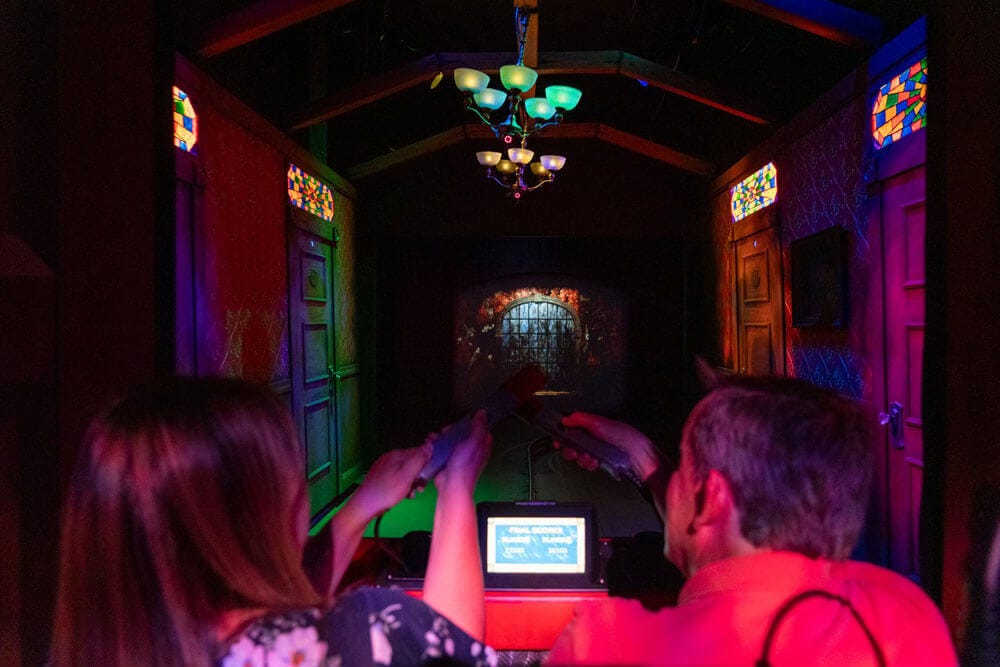
Some dark rides attempt to tell a story, while others are just a collection of random scenes. Many dark rides, such as the Buzz Lightyear attractions at the Disney parks, now include interactive features like onboard guns so that passengers can score points and compete with one another. Industry stalwart Sally Dark Rides helped pioneer interactivity for the genre and creates breakthrough attractions such as Haunted Hotel at Funtown USA in Maine.
Dark rides are also known as haunted rides, spook houses, tunnels of love, ghost trains, and Pretzel rides (named after a ride manufacturer, not the salty snack). As with many ride categories, there are hybrid attractions that can blur the terms. Revenge of the Mummy–The Ride at the Universal parks, for example, is both a dark ride and a roller coaster.
What is a flat ride?
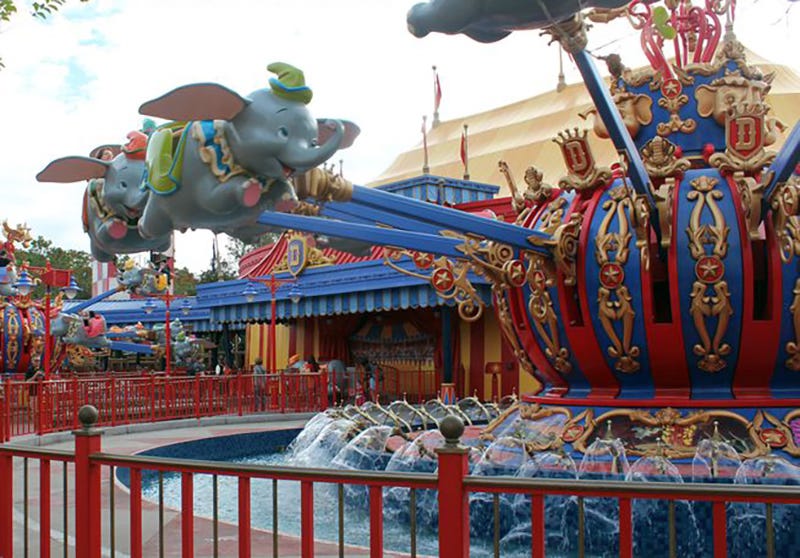
The term is used to generically refer to a broad variety of attractions, but a flat ride typically refers to attractions that spin around. Depending on their speed and other factors, they may or may not be considered thrill rides. Slow-moving, low-profile, and low-impact attractions are typically grouped into the sub-category, “kiddie rides,” and are intended for young riders. More thrilling flat rides that include high speeds and other disorienting features are affectionately known in the amusement industry as “spin-and-spew,” “spin-and-puke,” or “whirl-and hurl” rides. Lovely imagery, eh? Examples include the Tilt-A-Whirl, Scrambler, Gravitron, and Flying Bobs (or Himalaya).
Flat rides are sometimes referred to simply as “flats.” Unlike coasters, which can take up a lot of real estate and conform to a park’s terrain, flat rides are compact and designed to be installed on a flat base. The term also refers to portable rides at carnivals and fairs that can be disassembled and laid flat in trailers for transport.
What is a motion simulator ride?

A motion simulator ride uses seats that move in sync with point-of-view media projected onto a screen to provide viewers with the illusion that they are moving and physically participating in the action. Most motion simulator rides are presented in theaters of various sizes. Although viewers never move more than a few inches in any direction, they can feel as if they are accelerating wildly, speeding, free falling, among other sensations.
One of the earliest motion simulator rides is Star Tours at the Disney parks. It uses 40-passenger cabins that are mounted on motion bases. Other rides use different motion base configurations. Individual seats might have their own motion controls; sometimes, rows or sections of seats move together. In Despicable Me Minion Mayhem at the Universal Parks, for instance, the theater is divided into sections of seats, with each section having its own motion base.
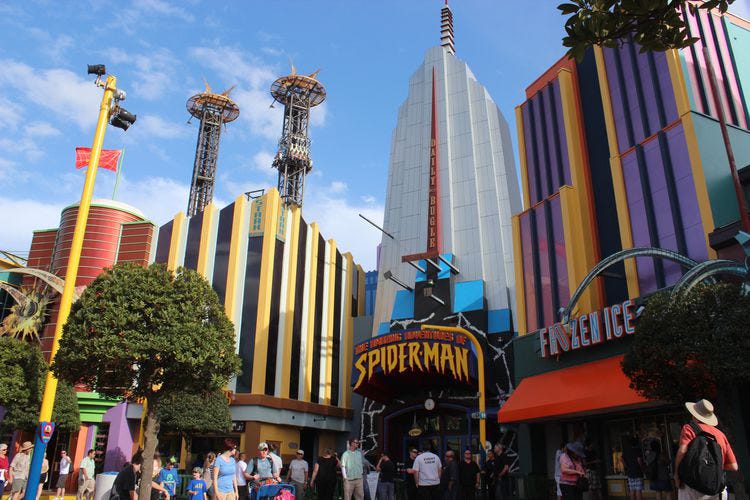
A sub-genre of the concept is the roving motion base simulator ride. Using a vehicle that is mounted on a motion base, it combines a dark ride with a motion simulator ride. As in a dark ride, the vehicles move through a series of scenes that include actual, practical set pieces. But the sets also include screens onto which action is projected, and with which the vehicles move in tandem. The Amazing Adventures of Spider-Man at Universal Orlando’s Islands of Adventure introduced the concept of a roving motion base simulator ride.
Motion simulator rides are also known as ride films, ridefilms, and motion theaters. The late Douglas Trumbull, who developed attractions such as Back to the Future: The Ride, developed the concept of the motion simulator ride.
What is a flying theater attraction?
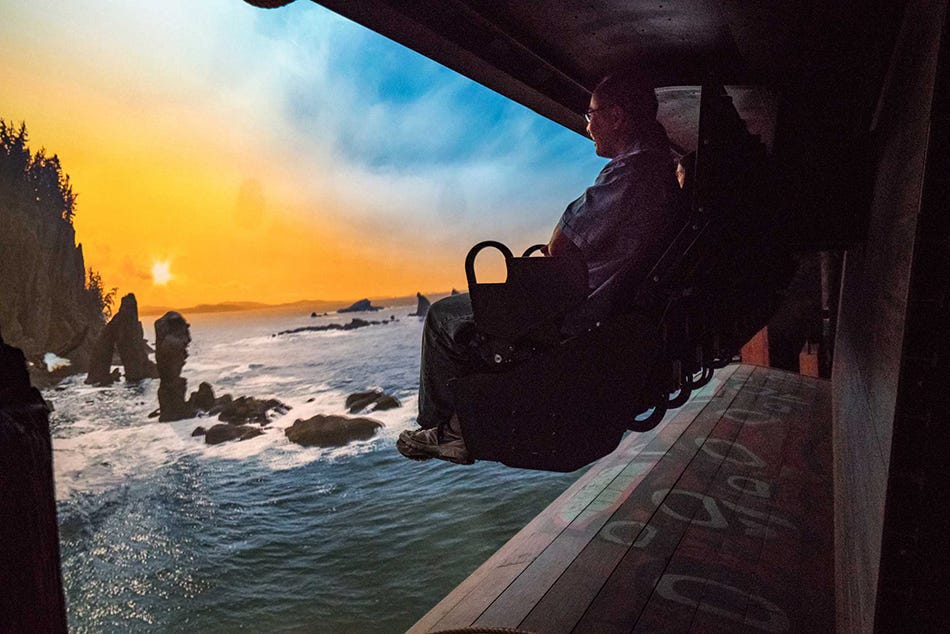
A flying theater uses banks of seats that rise into the air and move in sync with action projected onto a large screen, which is often domed to envelop guests in the imagery. The attractions typically simulate hang gliding and often sends guests on journeys above famous sights. The Mouse launched the genre with the original Soarin’ at Disney California Adventure. Standalone flying theaters, such as Wings Over Washington in Seattle and SkyFly: Soar America in Pigeon Forge, Tennessee, can sometimes be found in popular tourist destinations. I suppose flying theater attractions could be considered spinoffs of motion simulator rides.
Did you know what a flat ride was before reading this article? Have you ever experienced a ride that justified the insider slang term, “whirl-and hurl?”