


For this article, I’m going to go back a number of years and share memories from one of the highlight events of my career.
It was a surreal moment in a day filled with surreal moments. Rounding a corner in the room containing Walt Disney Imagineering’s art history archives, there it was: the famous 1950s concept drawing of Disneyland that designer Herb Ryman completed in one weekend with Walt Disney standing over his shoulder.
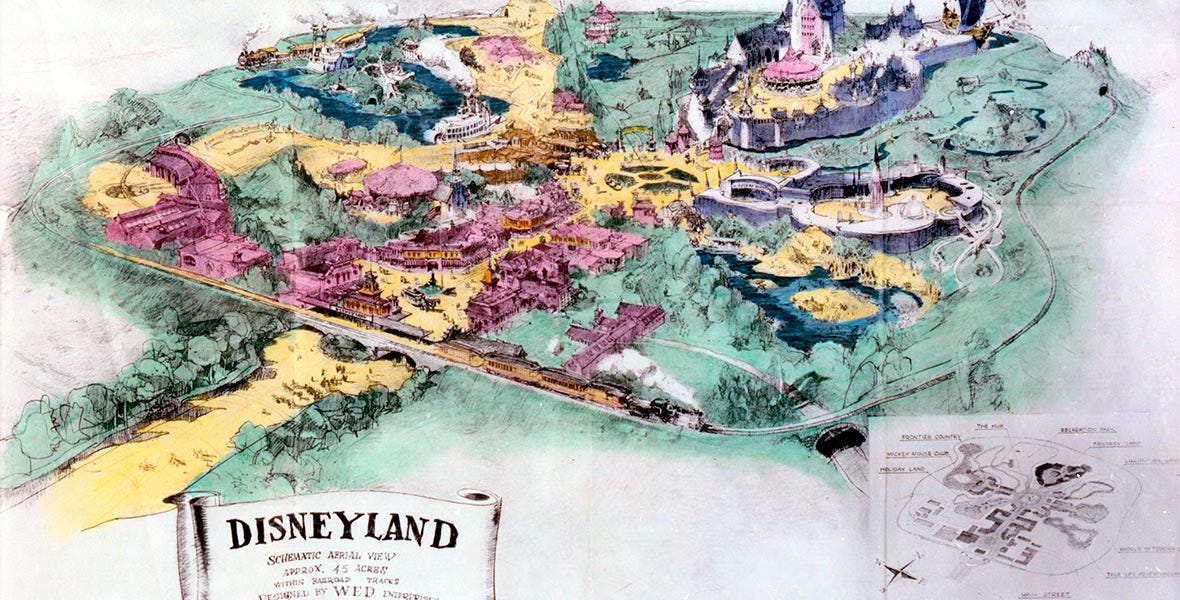
This wasn’t a reproduction; it was the actual legendary piece. Casually propped up on a pallet (it was either arriving from or en route to an exhibit), Ryman’s drawing sat among some of the other 80,000 pieces of artwork stored at Imagineering headquarters that Disney’s creative gurus had created through the years. “It was all started by a mouse,” Walt Disney once famously said. With deference to Mickey, Disneyland, and the very idea of a “theme park” for that matter, really all began with that drawing.
So how was it that I came to be ogling Ryman's historical artwork and roaming Imagineering’s hallowed halls in Glendale, California? Among the industry professionals who read my articles was Jon Georges, who then served as director of Blue Sky Development at Walt Disney Imagineering. In 2007, he invited me to speak to the revered group as part of the organization’s Insight Out speaker series. After my presentation, I was treated to an exclusive tour of the sprawling campus.
By the way, when Ms. About Theme Parks learned that I was going to be making a presentation to the Imagineers, she said, incredulously, “So let me get this straight. You are going to talk to them about the theme park industry?” Admittedly, the notion seemed a bit nuts, but the Imagineers were a wonderful audience, and we had a lively exchange about parks and themed entertainment. That might be a topic for another article.
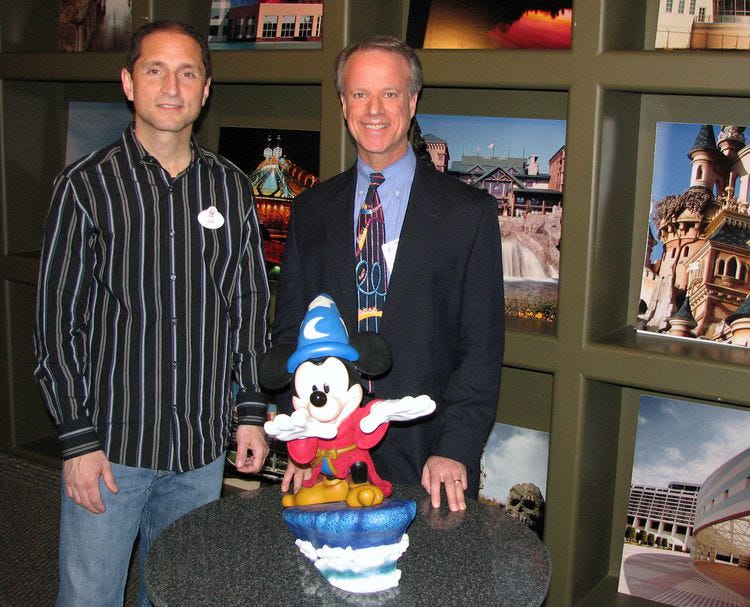
While I did get to peer behind the scenes, I wasn’t granted unfettered access. There were plenty of hush-hush projects and Imagineers secreted away in their workshop lairs. This article isn’t meant to be a comprehensive overview of Imagineering; rather, it’s a recap of some of my observations that day–a geek’s ramblings, if you will.
It was surprising to discover that the folks who design iconic castles and grandiose geodesic domes conduct their work in distinctly bland and nondescript buildings. There wasn’t even a sign, modest or otherwise, to indicate Imagineering’s home base. Driving down Flower Street in Glendale, it would have been impossible to locate the campus without knowing its address. Inside, however, there were characteristic traces of Imagineering whimsy everywhere.
In the courtyard outside the commissary, for example, gondolas from Disneyland’s defunct Skyway served as makeshift picnic tables. The Environmental Design and Engineering building, which houses architects, engineers, and interior designers, was once a bowling center that was open to the public. Remnants of its kitsch past remained, including a conference room with a maple table fashioned out of the lanes’ floorboards and a podium that looked like a score table.
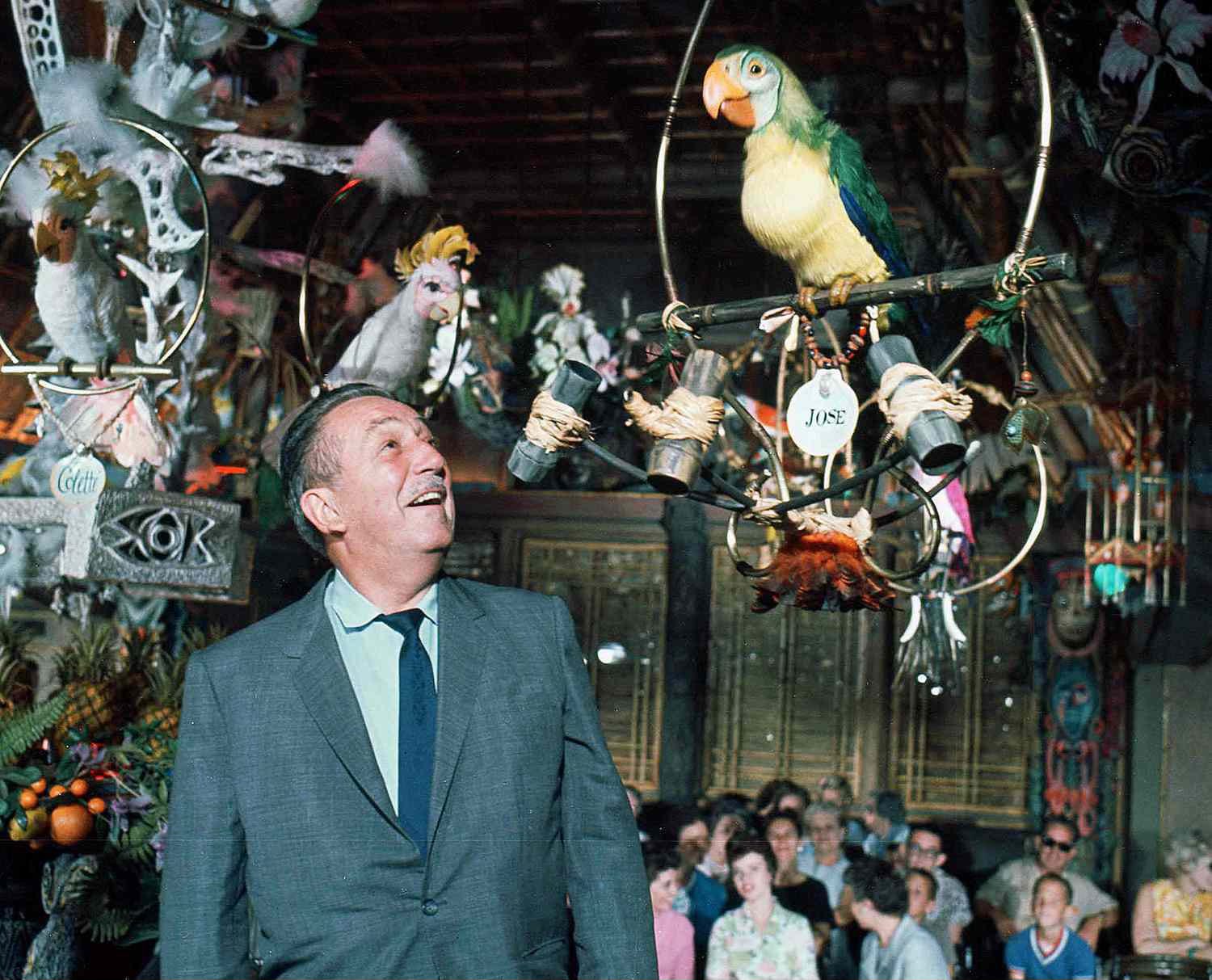
One hallway in the main building is known as the John Hench Graffiti Gallery. An influential and beloved artist and designer, Hench worked at the Disney company for over 60 years and was senior vice president for Imagineering. The hallway was lined with lively portraits, sketches, montages, and other displays contributed by Imagineers in homage to Hench, who died in 2004. (For more on John Hench and Imagineering, consider reading his wonderful book, “Designing Disney: Imagineering and the Art of the Show.” )
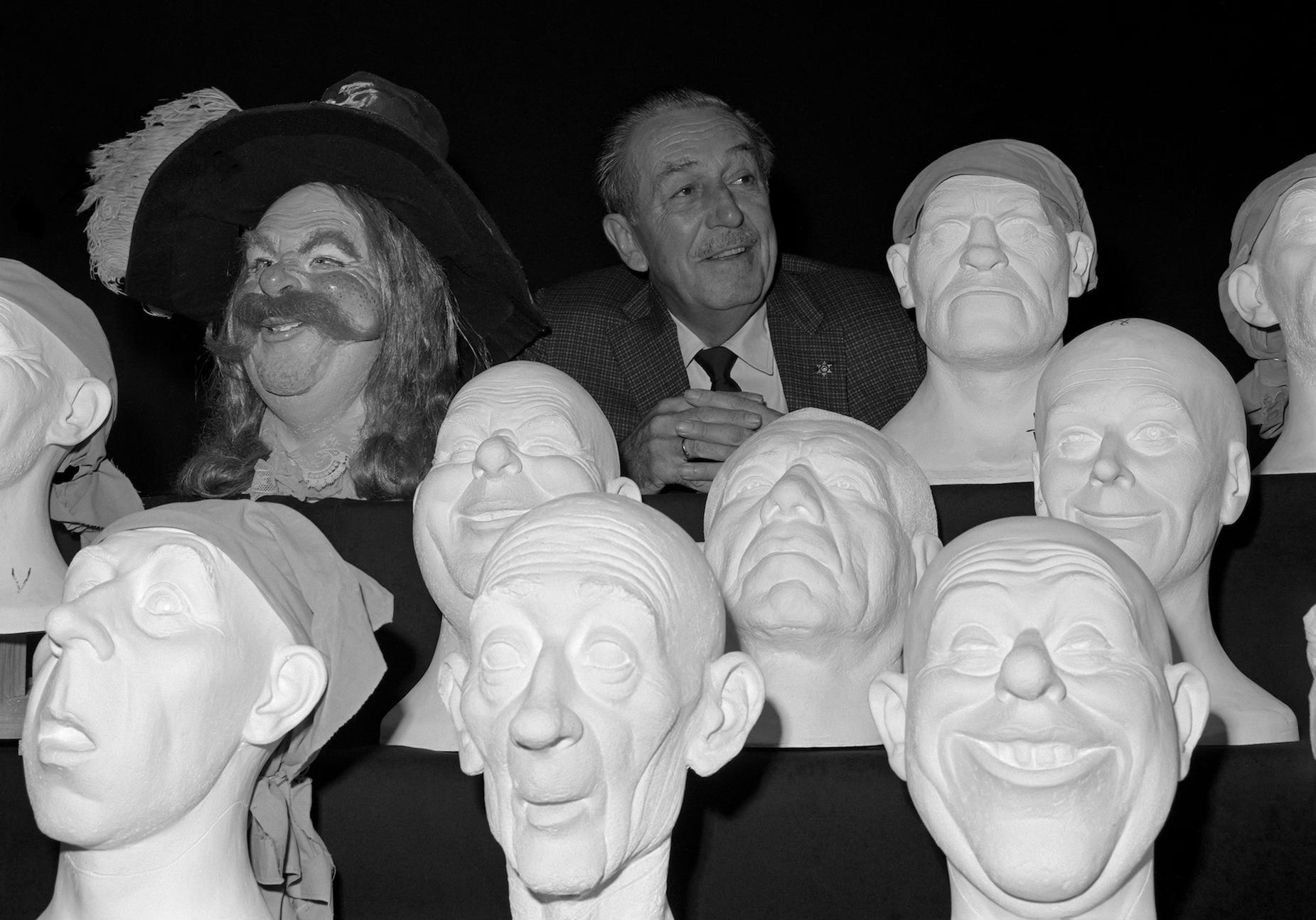
Perhaps the oddest (and geekiest?) experience I had at Imagineering came about midway through my tour. My guide escorted me into the sculpture studio and left me by myself for a few moments to wander the hushed room and gaze at plaster busts of highly expressive pirates from Pirates of the Caribbean, Hollywood celebrities from The Great Movie Ride at Disney’s Hollywood Studios, and lots of other Disney statuary. In one corner of the room, the original Snow White and the Seven Dwarfs figures that once delighted guests at Disneyland laid in state, looking a bit bedraggled. (Fiberglas replicas now stand sentry at the park.) It was both eerie to be alone with all of the silent figures and a tad overwhelming to see so much theme park history.
History is important at Imagineering. The art history archives are part of a wing devoted to preserving the parks’ past. There is also a slide library with over 2 million actual and digitized images of attractions as well as the research that went into developing them. For example, the woman who oversaw the slide library said that there were many photos of Africa chronicling the trips that Joe Rohde and other Imagineers took as they were designing Disney’s Animal Kingdom.
A separate show documentation library included a dossier of information for each Disney attraction with items like color samples, design references, and unusual artifacts such as Tiki Bird feathers and fur patterns from the Yeti who resides inside the Expedition Everest coaster (and all these years later is still stuck in “Disco Yeti” mode). There were even undergarments worn by the animatronic characters (who knew?) stored there.
Georges pointed out some color swatches of bright paints and said that they were for one of the dark rides that incorporated black light effects. “We include samples of what the paint looks like in natural light and how it appears under black lights,” he noted. “Black light painting is becoming a lost art.”
Georges said that the libraries, particularly the show documentation library, help Imagineering and the Disney parks maintain the attractions. It’s known as “show quality standards,” or SQS in Disney-speak. I guess when it’s time to trade out Richard Nixon’s undergarments in the Hall of Presidents, it helps to have a record of what size and brand he wears.
Of course, the libraries aren’t used to exclusively focus on the past. Imagineers frequent them to explore new concepts and do research for attractions under development as well. Georges used another hallway display to take me through Imagineering’s development process. The walls were filled with photos, illustrations, and text depicting the stages, including: blue sky (the department that Georges oversaw), which provides the seeds that evolve into attractions; concept development and feasibility, where ideas take shape in the form of two- and three-dimensional renderings as well as computer-generated models; design and production, during which capital is approved, play-testing is conducted, and systems are developed; construction and installation, where all of the Imagineering disciplines work collaboratively to build the actual attraction; test and adjust, to tweak the attraction; grand opening; and patio party, when the team members celebrate the completion of the project (and doubtless hang out in the old Skyway vehicles).
Since my original visit, I've had the opportunity to return to Walt Disney Imagineering a few times. (It's one of the wonderful perks of being a theme park journalist.) And guess what? You too could visit Walt Disney Imagineering. Adventures by Disney, the company’s guided tour division, includes a stop at the Glendale headquarters on its Disneyland Resort and Southern California Escape itinerary. It also includes a tour of the Walt Disney Studios (another legendary place I got to visit and write about).
“Disneyland will never be completed...as long as there is imagination left in the world,” is another famous Walt-ism. Thankfully, there appears to be plenty of imagination to go around among today’s merry band of Imagineers.
Would you want to visit Walt Disney Imagineering? What would you hope to see if you toured the Glendale headquarters?
Oh, good grief, yes! More than a few years ago, I got to go to Imagineering to help stuff envelopes for a Ryman Arts event; while we spent most of the time in a conference room, we got to take short stretch breaks and snack breaks, and every time I went down a hall, I would say, “Wow, would you look at THAT?!?” Someday when I have more money than common sense, I want to take that ABD tour.
Wow, that tour looks amazing. But it is a hard sell to my wife who does not share my deep love for amusements parks but at least goes with me. My oldest daughter at age 25 won't go to amusement parks anymore but my youngest at age 23 loves them as much as me.
Arthur, are your spouse/kid(s) amusement park fans?