


From augmented reality experiences to roving motion base simulators to mechanical monstrosities that subject passengers to extreme forces, amusement parks and theme parks often feature the latest whiz-bang technology. Some parks have been around for a long time, however, and offer antique carousels and other classic rides as well. As much as they can’t wait to hop aboard the newest sensation, park visitors also enjoy reveling in nostalgia by getting back on tried and true attractions. They can rekindle fond family memories that might span many generations. That’s part of many parks’ unique, multi-pronged appeal.
National Roller Coaster Day, which will be celebrated on Sunday, August 16, puts the long-reigning king of the midway in the spotlight. Sure, there are plenty of cutting-edge thrill machines out there (such as the extremely wacky Bakunawa–an inverted launch at 80 mph? Yikes!–coming to Six Flags Great Adventure in New Jersey next year). But, there are also a surprising number of vintage coasters. In honor of National Roller Coaster Day, consider reveling in nostalgia and rekindling (or creating) some fond memories of your own by riding the rails of the country’s oldest, still-operating coasters. All of them date back to the 1920s and are wooden. (The first tubular steel coaster didn’t debut until 1959.) Ready to roll?
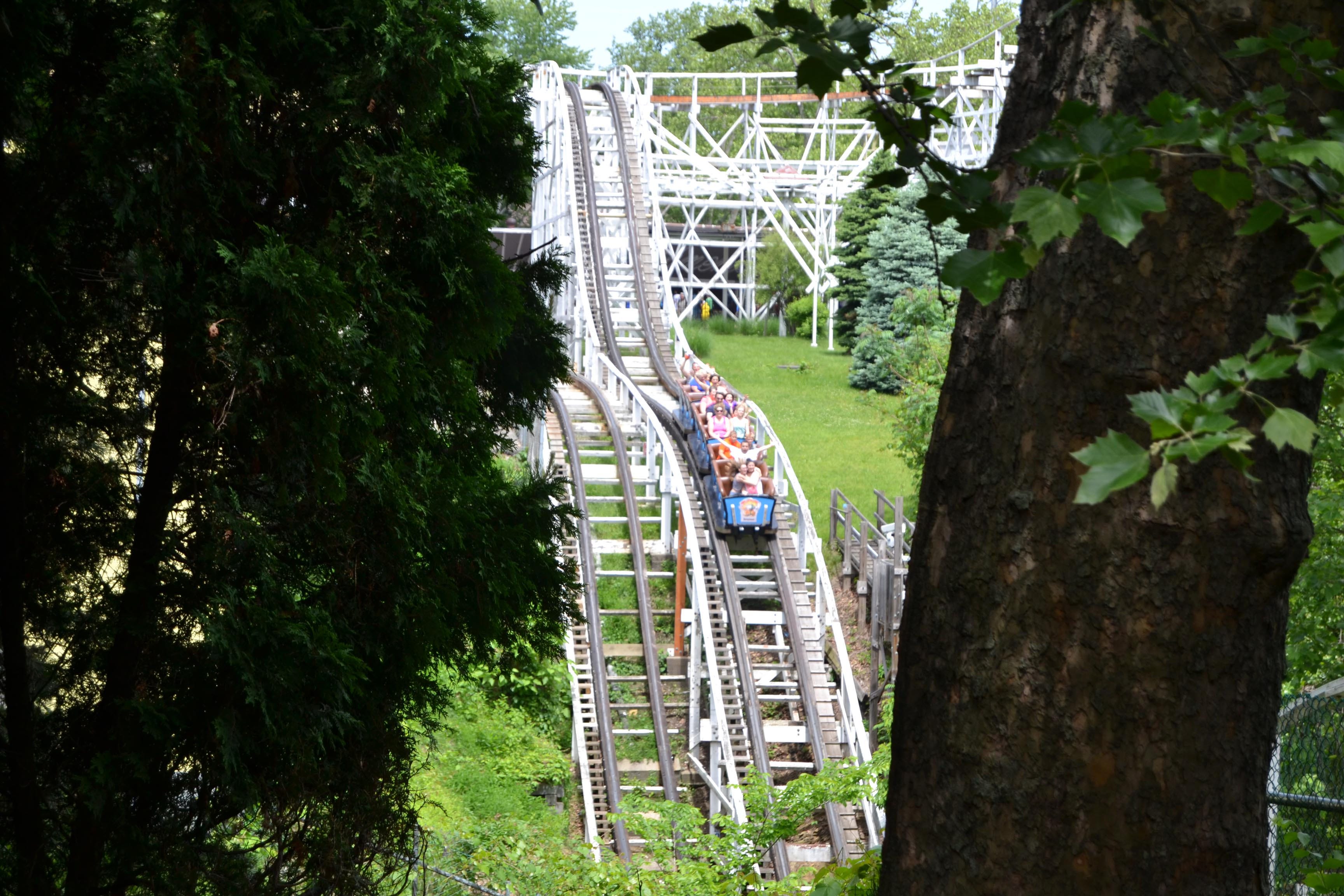
Before we jump into the oldest coasters that are running, let’s take a moment to mourn two rides that are standing but not operating–and are likely to be demolished. Leap the Dips opened in 1902 at Lakemont Park in Pennsylvania. Prior to its closure in 2023, it had been the world’s oldest surviving coaster. Listed in the National Register of Historic Places as an Historic Landmark, it may yet be revived. But the park’s financial challenges and legal snafus make that doubtful. Wild One at Six Flags America in Maryland was transplanted from Paragon Park in Massachusetts where it opened as Giant Coaster in 1917. When Six Flags shuttered the DC-area park in 2025, it probably sealed the fate of the historic ride.
Jack Rabbit – Opened in 1920 at Kennywood in Pennsylvania.
Boasting three beloved "woodies" on the list, Kennywood is an amusement park shrine (that also has some great, newer rides among its arsenal). Older parks typically remove most of their early rides, but Kennywood takes great care keeping its esteemed trio coasting along. The oldest of the bunch, Jack Rabbit is a terrain coaster that uses the natural topography of a ravine. Although it climbs 40 feet, it features a surprising 70-foot double-dip drop into the ravine.
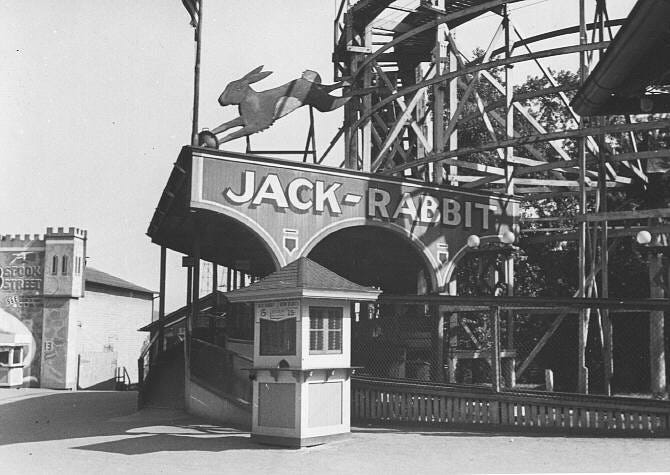
Jack Rabbit - Opened in 1920 at Seabreeze in New York
It opened the same year and has the same name as the Kennywood ride (actually a couple of weeks before its Pennsylvania namesake), but the similarities end there. This Jack Rabbit rises and falls 75 feet and sends passengers soaring along a series of airtime-filled hills known, appropriately enough, as “bunny hops.” The ride also careens through a tunnel for its lights-out finale. There are only two operating coasters elsewhere in the world that predate the two Jack Rabbit rides in the U.S.
Roller Coaster - Opened in 1921 at Lagoon in Utah
It may not have an especially original name, but Lagoon’s Roller Coaster offers a satisfying double out-and-back layout, which is, essentially, two side-by-side ovals. The ride delivers a not-too-shabby 45-mph top speed.
Thunderbolt - Opened in 1924 at Kennywood in Pennsylvania
Another ride that takes advantage of Kennywood’s hilly terrain, Thunderbolt delivers a big drop right out of the station. Its lift hill is in the middle of the circuit, and passengers get to experience the biggest drop, a 90-foot doozy, for the finale. Originally known as The Pippin, Kennywood redesigned some of the ride’s track and renamed it in 1968.
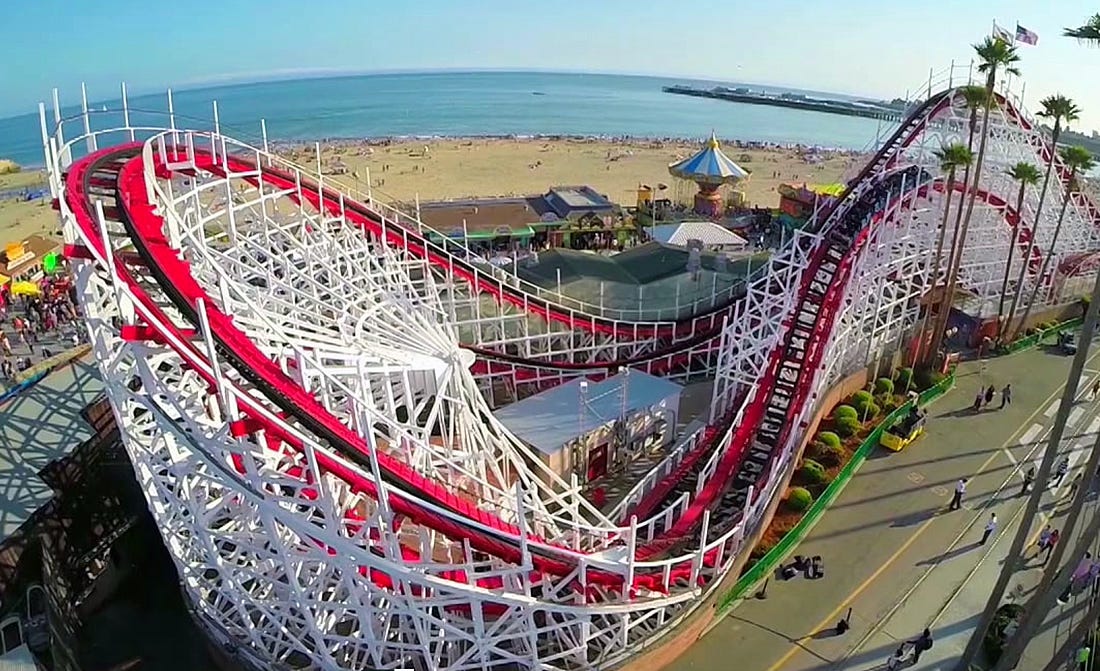
Thunderhawk - Opened in 1924 at Dorney Park in Pennsylvania
Located at one of the country’s few remaining trolley parks, Thunderhawk features a figure-eight layout, climbs 80 feet, and reaches a top speed of 45 mph. Until 1988, it was known by the more generic name, “Coaster.”
Giant Dipper - Opened in 1924 at Santa Cruz Beach Boardwalk in California
Santa Cruz Beach Boardwalk lovingly preserves its National Historic Landmark. With a 65-foot drop and a 55-mph top speed, Giant Dipper really gets the party started and delivers some potent doses of out-of-your-seat airtime. Before it hits the lift hill, the coaster’s train travels through a dark tunnel.
Giant Dipper - Opened in 1925 at Belmont Park in California
This Giant Dipper is similar to the same-named coaster in San Diego and was designed and built by the same team. It also whizzes along at a top speed of 55 mph while offering arresting views of the shoreline.
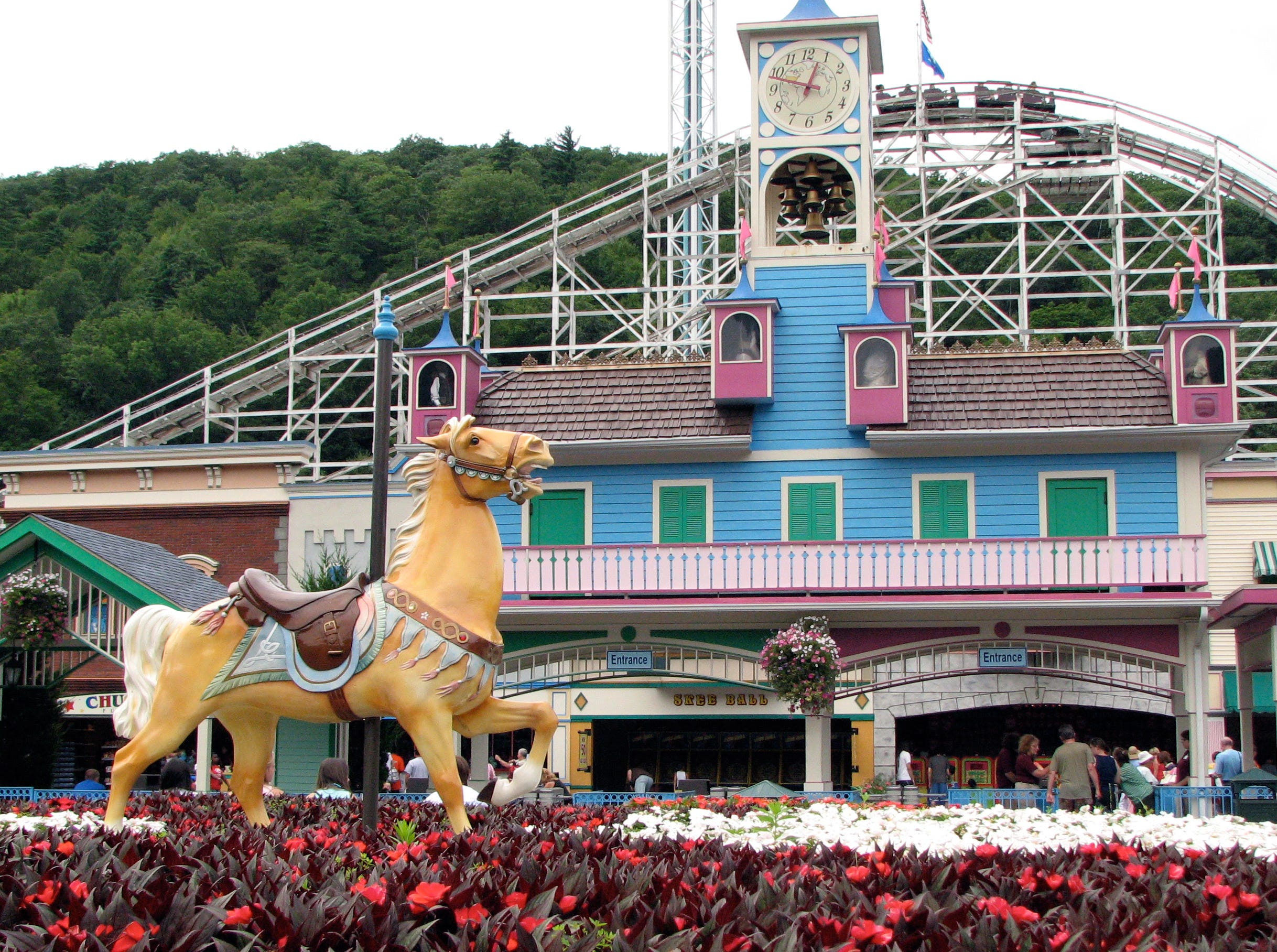
Cyclone - Opened in 1927 at Coney Island in New York
Yet another ride recognized as a National Historical Landmark, Cyclone is one of the most famous coasters in the country (and the world, for that matter). Along with the Wonder Wheel and other living pieces of Americana, it stands as a testament to Coney Island’s resilience. Cyclone climbs 85 feet, drops at a steep 59-degree angle, reaches a spry 60 mph, and delivers a satisfying, if herky-jerky ride. Interestingly, the hybrid ride features a traditional wooden coaster track atop a steel lattice structure.
Racer - Opened in 1927 at Kennywood in Pennsylvania
Adding some suspense to the ride experience, two trains leave Racer’s station at the same time and compete against one another. Using a “Möbius” layout, Racer actually has one continuous track instead of separate, twin tracks.
Wildcat - Opened in 1927 at Lake Compounce in Connecticut
The lovely Lake Compounce, which opened in 1846, has the distinction of being the country’s oldest continuously operating amusement park. Its Wildcat makes a stunning statement at the park’s main entrance. The coaster climbs 85 feet and hits a top speed of 48 mph. The park recently gave the venerable ride some TLC to keep it rolling well into the future.
Kiddy Coaster- Opened in 1928 at Playland Park in New York
The last two coasters on the list are located at Playland Park, a municipal park operated by Westchester County. Its Kiddy Coaster, which opened with the park, is so small, adults are not allowed to ride on it.
Dragon Coaster- Opened in 1929 at Playland Park in New York
After plunging into a 128-foot drop, Dragon’s train enters a coiled tunnel designed to look like its namesake creature for a few disorienting moments. Upon getting spit out by the beast, passengers finish the route by twisting and turning in and out of the ride’s wooden structure.
Everyone can leave a comment. Let’s hear from you. How many of these classic coasters have you experienced? What’s your favorite old coaster?
Of those I've only been on Thunderhawk at Dorney and Cyclone at Coney Island. It was exciting to get to ride both of those for the historical significance. And while they may not give the same level of ride as modern coasters, there's something to be said for the thrill of something that feels just a bit more janky and "dangerous."
Case in point - one of my favorite old coasters (though not nearly as old as this list) is Swamp Fox at Myrtle Beach (1966). The first drop is only 62 feet, but it feels as intense as a drop twice as tall. Yes, it can be rough, but that's what makes it so terrifying, particularly in the back row. While I certainly enjoy big modern coasters with multiple restraints and sensors and redundant safety features, some of the best rides I've ever had are on the coasters that make me feel like I'm going to fly out of the train at any moment.